A look you saw on a runway in one season can take many months — sometimes more than a year — to reach a store rack near you. That lag is not laziness. It is the whole machinery of trends of fashion working in sequence: designers sketch, ateliers make samples, buyers place orders, factories cut fabric, and only then does the shipping container arrive.
The internet has compressed parts of that journey, but not the parts you might think. What used to take a season of guesswork now takes days of data. What still takes months is thread, dye and freight. Understanding which half is fast and which half is slow explains almost everything about why your feed shows a trend months before your local mall does.
Where does a trend actually begin?
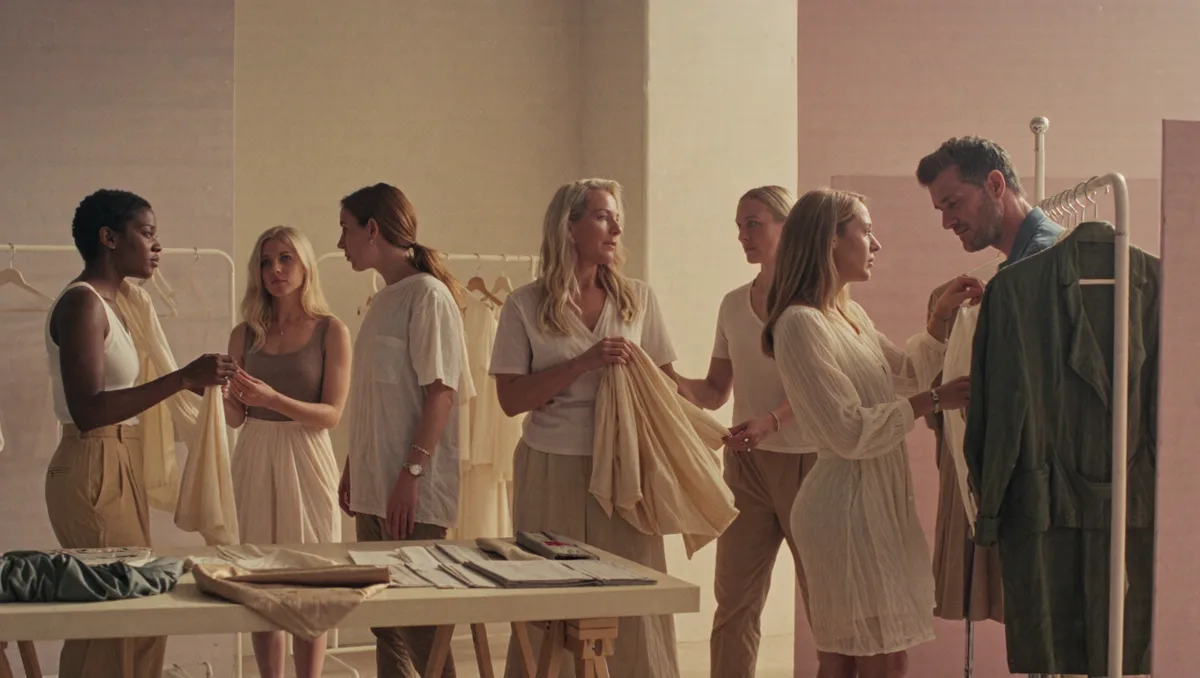
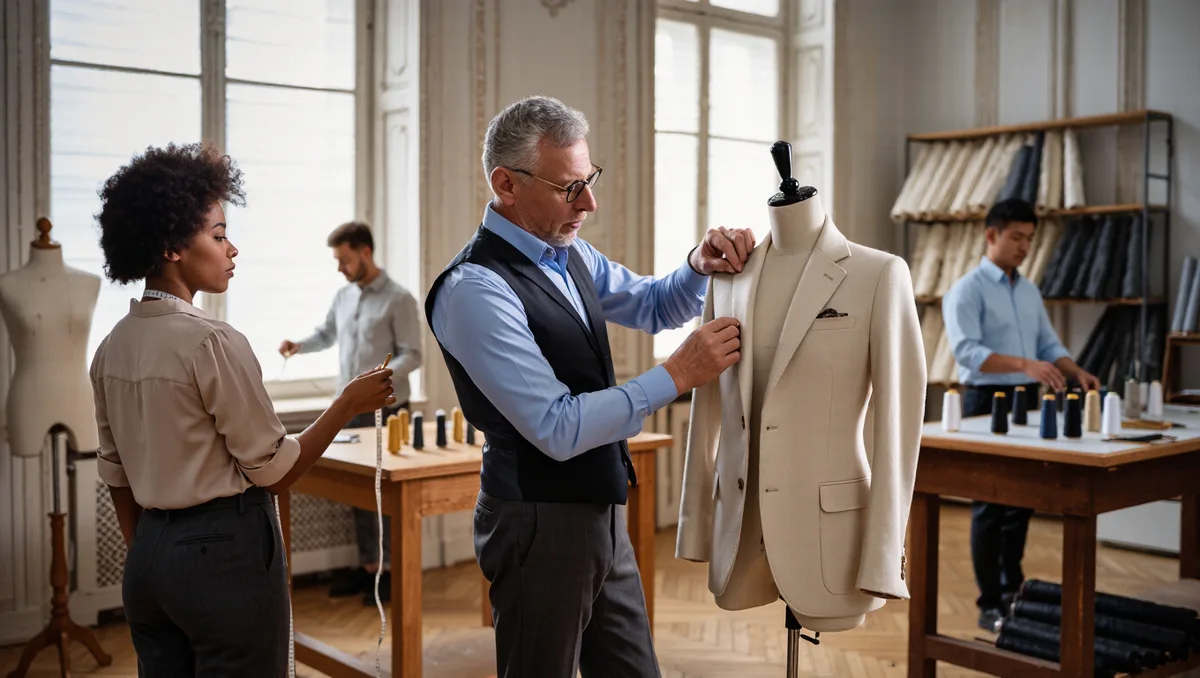
Before a look exists as clothing, it exists as an idea in a design studio. Designers pull references — archives, art, street photography, sometimes a film — and turn them into sketches. From the sketch comes a sample, usually sewn in-house or in a small workroom, in the actual fabric, on a real body. This is where the look gets its proportions, and proportions are where trends live. A silhouette is only a trend once it fits. For related coverage, see Dopamine dressing: where the mood-boost style idea actually came from.
Only after samples survive internal review do they go down a runway, or in recent years, get photographed for a lookbook posted online. The runway moment feels like the birth of a trend. It is closer to the announcement of one. The real decision — will this be made in quantity, at what price, for which stores — happens in the weeks after, in rooms the public never sees.
Who decides what gets made in bulk?
Buyers. Every multi-brand store and department store employs people whose job is to watch the shows, visit showrooms and place orders for the coming seasons. They are the filter between a designer's vision and your wardrobe. A buyer who loves a look but doubts their customer will pay for it simply does not order it, and a trend quietly dies in a showroom.
This is also where the mass-market split happens. Some labels sell the runway piece itself at a luxury price. Others license or reinterpret it — same silhouette, cheaper fabric, faster production — for the mid-market. The rack version of a runway look is almost always a translation, not a copy. Something is always lost in translation. Usually the lining.
How does the fast version get made so quickly?
Fast-fashion retailers run a different race. Instead of ordering a season ahead, many operate on short production cycles: they watch what resonates — on runways, on red carpets, on social platforms — and move a similar style into production within weeks. The trade-off is baked in. Shorter cycles mean less time for quality control, and the garment is designed to be bought now, not kept for a decade.
The speed comes from data as much as from manufacturing. Search behaviour is one of the clearest early signals a retailer can get. According to Google Trends, the tool is used around the world by newsrooms and many other organisations to track what interest is rising and where — and fashion teams read those same rising curves to decide which styles deserve a bigger production run. A hemline that starts spiking in searches can move from mood board to factory floor before a traditional label has even shipped its samples.
Our analysis: this is the genuine tension of the modern pipeline. The traditional system bets on taste, months ahead. The fast system bets on proof, weeks behind. Neither is strictly better. One invents the look; the other scales it. The culture needs both, even if the planet could do with less of the second.
What happens between the factory and your fitting room?
Once production is confirmed, the garment enters the least glamorous part of its life: fabric sourcing, dye lots, cutting, sewing, quality checks, packing, freight, customs, distribution centres and finally the store floor or the warehouse that ships your online order. Each step has a lead time. Multiply those lead times by thousands of units and the calendar starts to make sense.
This is also why a trend can feel over by the time it arrives everywhere. By the moment a look hits mainstream racks, the early adopters who wore it first have often moved on — a cycle we tracked in our piece on the micro-trend lifespan and how long you actually have before it peaks. The pipeline's length is precisely what makes trends feel disposable. If the clothes arrive late, the only way to sell them is to declare them urgent. This connects to our earlier piece, The micro-trend lifespan: how long you actually have before it peaks.
Can you spot where a trend is in the pipeline?
Yes, and it is a genuinely useful skill. A look appearing only on runways and in editorials is at the start of the pipeline — years out, or possibly never coming. When it shows up on influencers and in mid-price retailers, it is mid-pipeline. When it reaches the sale rack of a fast-fashion chain and every mall store at once, it is at the end. That final stage is usually the signal that the next thing is already being sketched somewhere.
What this means for you practically: if you love a look at the runway stage, you will pay the most and wait the least to copy it yourself. If you wait for the rack, you will pay the least and arrive last. Neither choice is wrong. Knowing which point in the pipeline you are buying from is the difference between setting a trend and receiving one.
The takeaways worth keeping
The journey from sketch to shelf runs on two clocks. Taste moves on the season clock: sketch, sample, show, order, produce. Demand moves on the data clock: search, signal, reorder, restock. Every trend you have ever worn passed through both, plus a buyer's judgement call and a factory's capacity limit in between.
What the evidence established is the shape of the pipeline. What remains genuinely unknowable, even to the people inside it, is which looks will survive the trip. A buyer can order the sample, the factory can cut the fabric, the store can build the display — and the trend still might not happen. That is the part no data dashboard has solved. The best the machinery can do is be ready when a look catches. The catching itself is still magic, or luck, depending on who you ask in the studio.