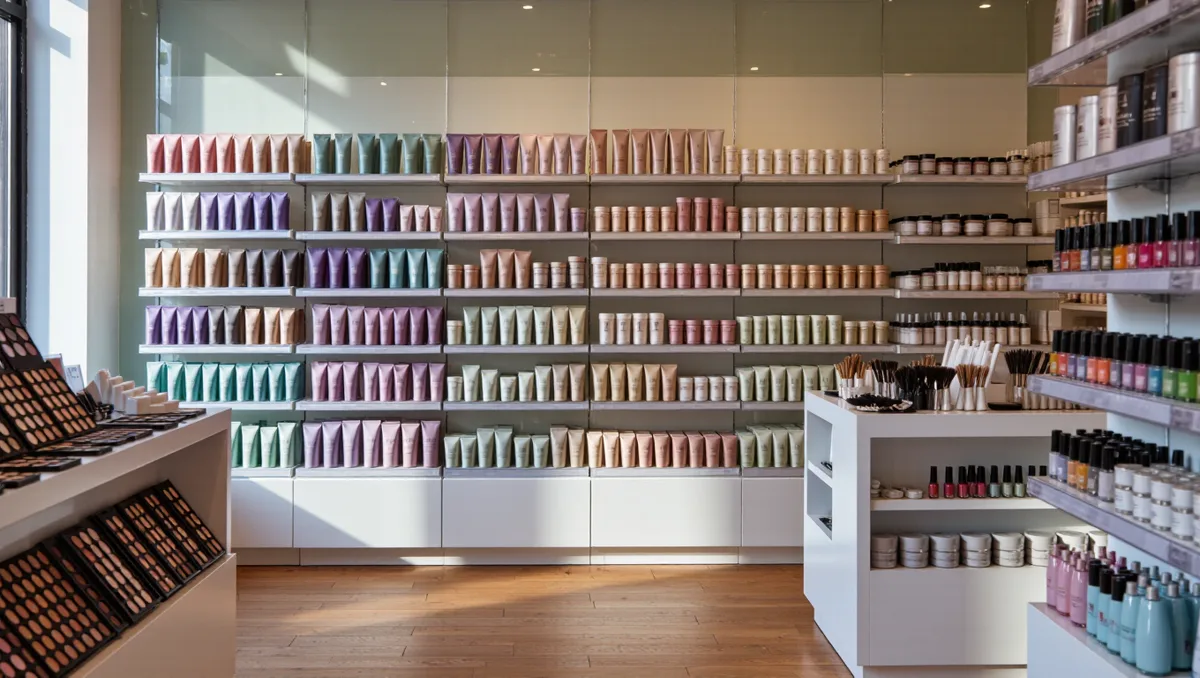
Shopping for beauty supply in Massachusetts is really two errands wearing one coat. There's the drugstore run anyone can do in any town. And then there's the specialty hunt — the textured-hair aisle, the professional nail lacquer wall, the esthetician-grade serums — which depends entirely on knowing where the state keeps its good shelves.
The short answer: Boston and its inner suburbs hold the deepest and most varied stock, Worcester and Springfield anchor the center and west, and everywhere else rewards a slightly longer drive or a well-timed order. The key qualification is that "beauty supply" means different inventory depending on who the store serves — a salon distributor, a nail technician, or a walk-in shopper — and each keeps different hours, different rules, and very different shelves.
Philosophers have argued for centuries about whether beauty lives in the object or the eye, and Wikipedia's overview of beauty notes the tension neatly: judgments of beauty rest on subjective feelings while claiming universal correctness at the same time. Shopping the supply aisle is the same argument in retail form. One person's essential is another's shelf clutter, which is exactly why knowing your own list matters more than any store's reputation.
What does "beauty supply" actually mean here?
Say "beauty supply" in Massachusetts and you could mean three different businesses. A salon distributor sells professional-only product to licensed stylists and barbers. A nail supply house stocks lacquer, gels, tips, and the tools techs actually use. And the walk-in supply store — the one with the window decals and the wall of hair care — sells to anyone who wanders in.
The distinction matters because the inventory follows the customer. Distributor stock skews toward back-bar sizes and color lines. Nail supply leans hard into e-files, lamps, and brushes. The walk-in shop is where you find the deep hair-care selection: oils, masks, leave-ins, ponytail pieces, and the wide-tooth combs the drugstore forgot.
Our analysis: decide what you're actually shopping for before you pick a door. The state has all three types. They just don't overlap as much as their signage suggests.
Where does Boston fit in?
Boston is the state's density play. The city and its close-in neighborhoods — plus Cambridge and Somerville just across the water — pack a lot of doors into a small radius, which means you can comparison-shop in an afternoon. Downtown crossing and the surrounding blocks have long carried general beauty retail, while neighborhood strips in Dorchester, Roxbury, and Mattapan are where the walk-in supply stores cluster, often with deep textured-hair and braiding inventory.
The inner suburbs add the salon-distributor layer. Route 1 and the belt of strip retail along the major highways host the professional-supply side of the business, where licensed pros restock and shoppers with a pro's recommendation can often follow.
One cultural note we keep coming back to: the supply store is a community institution, not just a shelf. It's where a technique travels — someone asks about a style, the counter person demonstrates, and the whole shop learns it. That's the part no delivery app replaces.
What about outside Route 128?
Worcester is the honest center of the state and shops like it. The city's main commercial corridors carry a solid mix of walk-in supply stores and salon-focused counters, close enough to Boston's orbit that stock turns over regularly.
Springfield and the Pioneer Valley run their own scene, oriented toward the Hartford market as much as Boston. The supply stores there tend to be family-run, with deep local relationships — the kind of shop where the owner knows which relaxer formulation regulars use. Western Massachusetts shoppers often split their runs between Springfield and the college-town retail in Northampton and Amherst, which leans more boutique and less supply-house.
Then there's the Cape and the islands, where seasonal population swings shape retail. Stock thins in the off-season and concentrates in summer. Plan accordingly, or make the supply run part of a mainland trip.
How do you shop the hair aisle like a pro?
Practical steps, in order:
- Write your list before you go. Supply stores are organized by product type and hair need, not by brand hype. Know whether you need protein, moisture, or hold before the wall of options finds you.
- Ask what the pros buy. Counter staff at a good supply store know what local stylists restock weekly. That's a better signal than any endcap.
- Check the size math. Liter sizes and back-bar bottles are the supply store's whole point. Price per ounce usually beats the drugstore dramatically — but only if you'll actually finish the bottle.
- Verify the return rule before you pay. Policies vary store to store, especially on opened product. One question at the register saves a later argument.
If your routine starts at the scalp, oiling has its own whole culture now — we covered how hair oiling went from kitchen ritual to cult step, and the supply aisle is where the ingredients for it live at working sizes.
Where do nail people shop?
Nail supply is its own ecosystem, and Massachusetts has it if you know to look. Professional techs buy from dedicated supply houses — lamps, e-files, gels, and the pigmented lacquer walls in shades the mass market never sees. Some are wholesale-leaning and happiest serving licensed techs; others welcome serious hobbyists.
The tell is the wall. If a store carries professional gel systems and a full range of nail art supplies, you've found a real supply house. If it carries press-ons and a single brand of polish, it's general retail with a nail corner.
The manicure itself has a long memory, too. The French manicure is nearly 50 and still booking, which tells you something about how slow the core of this category moves — and why supply stores still stock what they stocked a decade ago, plus whatever the techs asked for last month.
What should skincare shoppers know?
Skincare is the trickiest category in supply shopping, because the line between "professional grade" and "just labeled that way" is blurry. Esthetician suppliers sell active-strength formulas intended for use under supervision or with professional guidance. Walk-in supply stores carry a broader, gentler mix.
A sensible rule: match the strength of the product to your experience with it. If you're building a routine rather than overhauling one, start with the gentler shelves. And if you're untangling ingredient claims — the difference between a chemical filter and a physical one, say — our explainer on chemical vs. physical sunscreen is a good model for reading any ingredient story skeptically.
What this means in practice: supply stores reward the shopper who reads labels, not the one chasing the loudest bottle. The best shelf in the building is often the quiet one at eye level in the back.
The takeaway
Massachusetts beauty supply rewards a plan. Boston for density and neighborhood institutions, Worcester for the middle of the map, Springfield for the west and its family-run depth, and a supply run tacked onto any mainland trip if you're on the Cape or the islands. Know your list, ask the counter, check the size math, and the specialty shelves will do the rest.
What remains unknown is the store-by-store detail — hours, policies, and stock turn constantly, and no guide replaces a phone call before a long drive. Treat this as the map, not the address book. The shelves, as ever, have the final word.