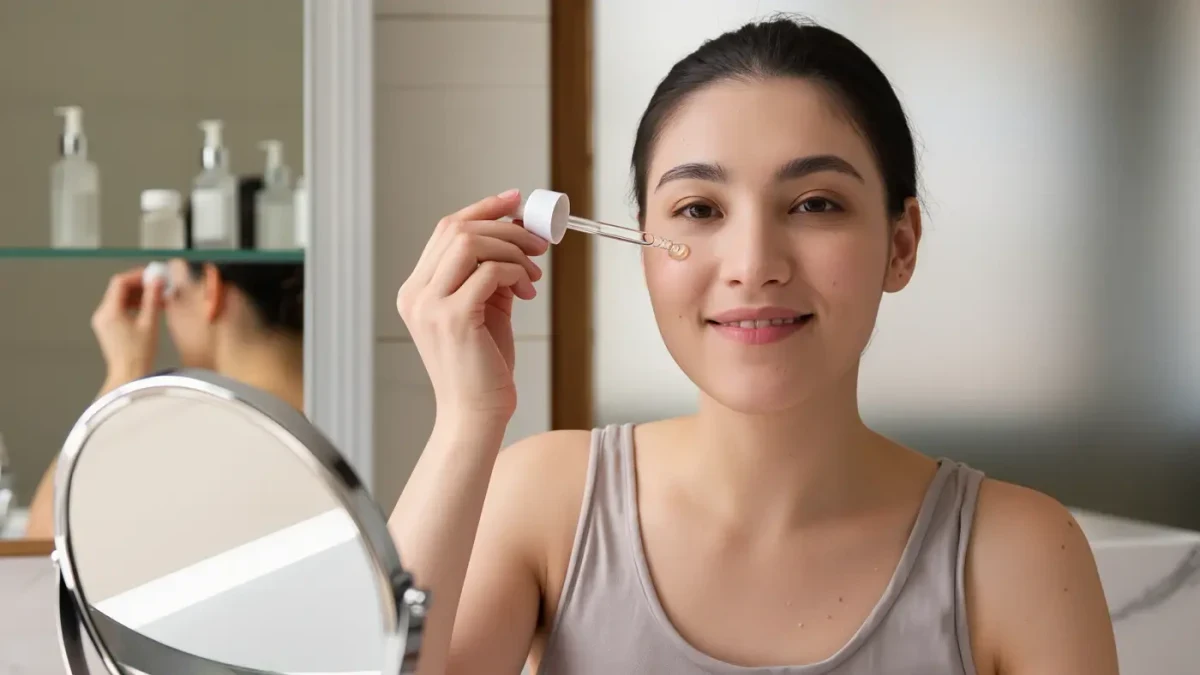
Niacinamide is a form of vitamin B3 that helps skin hold water, look more even, and produce less visible oil — and it is one of the most studied cosmetic ingredients on the shelf. A 2002 study in the British Journal of Dermatology found that 5% niacinamide reduced the appearance of hyperpigmentation after eight weeks. A follow-up line of research led by cosmetic chemist Zoe Draelos reported that 2% niacinamide lowered sebum production in clinical settings. It is also, quietly, one of the cheapest actives to formulate.
Which explains why it is everywhere. This guide covers what niacinamide can plausibly do, what the evidence is thin on, and how to slot it into a routine without buying a fifth serum you do not need. Note: this site publishes information, not medical advice, and nothing here replaces a dermatologist.
What is niacinamide, chemically speaking?
Niacinamide — also printed as nicotinamide on ingredient lists — is one of two main supplement forms of vitamin B3, the other being niacin. Your skin uses it to make NAD and NADP, two coenzymes involved in cell energy and repair. That biochemical day job is why it appears in both drugstore gels and prescription-adjacent formulas.
The difference between niacinamide and niacin matters more than the packaging suggests. Niacin causes flushing; niacinamide generally does not, which is the whole reason it became the cosmetic favorite of the two.
What does the research actually support?
Three claims have the longest paper trail:
- Pigmentation. The 2002 Hakozaki study found 5% niacinamide reduced transfer of melanosomes to skin cells, translating into visibly more even tone over eight weeks.
- Oil and pores. Draelos-published work in 2006 associated 2% niacinamide with reduced sebum output after two to four weeks.
- Moisture. Older research going back to the 1970s links topical B3 to boosted ceramide and fatty-acid production, which is why it shows up in so many barrier-adjacent moisturizers.
The fine-wrinkle evidence exists — a 2005 Bissett study used 5% niacinamide against fine lines — but it is thinner, and no serum outperforms a dermatologist's toolkit on wrinkles. Treat niacinamide as a texture-and-tone player, not a structural one.
How much niacinamide do you need?
Most studied effects kick in between 2% and 5%. Formulas climbing to 10% or 20% are not necessarily better; higher concentrations raise the odds of irritation and redness, particularly around the eyes. A well-made 5% is the evidence-backed sweet spot for most people.
Concentration is also a labeling question. If a brand does not disclose the percentage, position on the ingredient list gives a rough hint — anything listed after the fragrance or preservative phase is likely decorative.
Related stories: Skin flooding: what it actually means for your routine · How much product you actually need, from cleanser to SPF.
Does niacinamide work with other actives?
Yes, and the old internet fear about vitamin C is obsolete. The claim that niacinamide and ascorbic acid cancel each other out came from a 1960s study using raw heat, not facial conditions. Modern formulators pair them constantly; brands like The Ordinary built a product line around the pairing. If your skin is reactive, alternate morning and evening. Otherwise, layer and move on.
It also sits comfortably alongside retinoids, exfoliating acids, and sunscreen — often softening the experience of the stronger ingredients rather than competing with them.
How long before you see results?
Hydration effects are immediate-ish; tone and oil changes run on eight-to-twelve-week timelines in the published studies. If a bottle promises visible glow in three days, that is the marketing department, not the molecule. Take a bare-faced photo on day one, another at week eight, and judge from there.
The cultural footnote
Niacinamide's moment tracks the death of the ten-step routine. When skincare culture swung from maximalism to 'skinimalism' around 2020, the ingredient that did five jobs at 5% became the logical protagonist — a multivitamin in a single pump. The serum aisle did not get quieter. It got one ingredient louder.
How do you pick a bottle?
Serum or moisturizer, either works — the vehicle matters less than consistency. Look for a disclosed percentage, a shortish ingredient list, and packaging that does not leave the formula in clear light. An opaque pump beats a dropper on price-per-use, and a moisturizer with 4–5% niacinamide can replace the serum step entirely if your shelf is getting crowded.
Quick answers
Can I use niacinamide every day? Yes. Studies showing benefits ran on daily use, and the ingredient is tolerated well at 2–5% by most skin types. If you notice stinging, drop to once daily or lower the concentration, and check that the irritation is not coming from a stronger active in the same routine.
Does niacinamide cause purging? Purging is a documented reaction to retinoids and exfoliating acids that speed up cell turnover. Niacinamide is not in that family, so breakouts after starting a new serum more likely trace to the formula's base, another active, or coincidence.
Is niacinamide or vitamin C better? They do overlapping but different jobs: vitamin C leans antioxidant and brightening, niacinamide leans tone, oil, and moisture. The evidence is stronger for using both at sensible strengths than for agonizing over which one wins. Many formulas simply contain both.