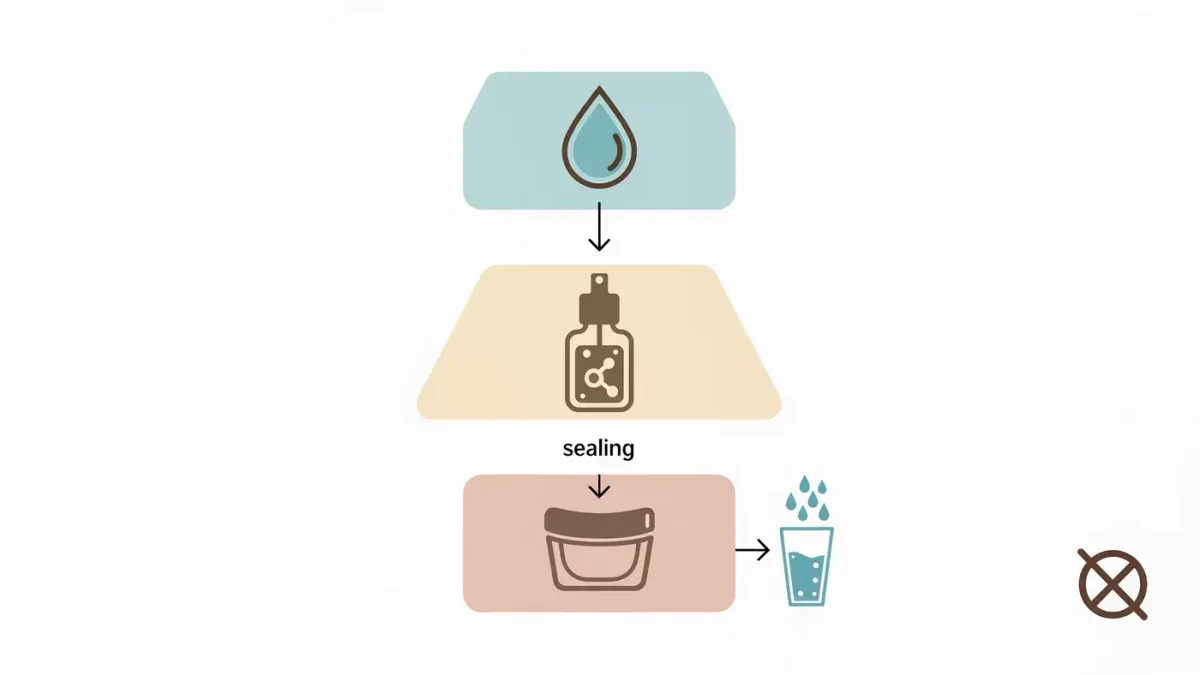
Skin flooding is a layering method — not an ingredient — where you apply hydrating products to deliberately damp skin in quick succession: typically a mist or water, a humectant serum with hyaluronic acid or glycerin, then an occlusive moisturizer to seal everything in before it evaporates. The technique went viral on TikTok in late 2022 and early 2023 as the answer to winter dryness, racking up hundreds of millions of views on the tag. The mechanism behind it is old, legitimate cosmetic science: humectants pull water, occlusives keep it. Flooding just choreographs the sequence.
So the honest verdict up front: the method is sound, the branding is new. Below is what actually happens on your skin during a flood, who benefits, and the two situations where it backfires. Usual note applies: this site publishes information, not medical advice.
What happens during a skin flood, physically?
Step one: damp skin. Water on the surface is what humectants like hyaluronic acid and glycerin bind to — applied to bone-dry skin in a dry room, hyaluronic acid can pull moisture from deeper layers instead, which is the exact mistake flooding exists to prevent. Step two: the humectant layer, pressed on within seconds. Step three: the seal — a cream with occlusives like petrolatum, squalane, or shea that slows transepidermal water loss, the evaporation dermatology measures in grams per square meter per hour.
Done right, the result is skin that stays plump through a dry afternoon instead of deflating by lunch. Done in a rush, it is just moisturizer with extra steps.
Who is skin flooding actually for?
Two groups gain the most. Dry, tight, or flaky skin — especially in heated indoor winters — gets the obvious benefit. And people who own a hyaluronic serum and a 'nothing' moisturizer get the pairing instructions the products never included. Oily skin can flood too, with a gel-cream seal, though the payoff is smaller because sebum is already doing occlusive work.
Who should skip it: anyone with active eczema flare-ups or compromised skin should clear any new technique with a doctor first, since damp-layering can sting on inflamed skin. And if your current routine already applies serum to damp skin and follows with cream, congratulations — you have been flooding since before the hashtag.
Related stories: Niacinamide, explained: what it actually does · Winter skin in July: why timing advice confuses you.
What do you actually need to buy?
Nothing, probably. A flood is three products you likely own:
- Water source: a face mist, or your still-wet hands and face from cleansing. Free.
- Humectant layer: any serum listing glycerin or hyaluronic acid near the top of the ingredient list. Most of them do.
- Seal: your moisturizer, ideally with an occlusive in the first half of the list. Petrolatum is the most studied occlusive on record; the American Academy of Dermatology's guidance on dry-skin care centers exactly this 'moisturize to lock in water' logic.
The aesthetic awkwardness of flooding as commerce is that it sells no new hero product, which is why the content outlived the shopping.
Does the timing window really matter?
Less mystically than the videos imply. There is no 30-second magic deadline; the real enemy is a humectant film that has already air-dried on a low-humidity day. In a humid climate, the window is generous. In a heated apartment in February, move briskly, and consider a humidifier — raising ambient humidity does for your whole face what flooding does for ten seconds of it.
Why did the name stick?
Because TikTok rewards a verb. The same logic circulated for decades as 'apply to damp skin' — a line every hydrating serum already printed — but 'skin flooding' arrived in 2022 with a risk narrative (dehydration!), a before state, and a choreography you could film in one bathroom mirror take. The technique did not change. The packaging, as ever in this industry, was the product.
Quick answers
Can I flood with an active like retinol or vitamin C? No — flood with hydrators only. Damp skin increases penetration, which you want for glycerin and exactly do not want for actives dosed for dry-skin application. Keep retinoids and acids on dry skin per their labels, and flood in a separate step or a separate evening.
Is skin flooding good for acne-prone skin? It can be, with non-comedogenic, gel-based layers and a light seal. The technique itself adds no oil; it adds water, which acne-prone skin often lacks under all that sebum. Skip heavy butters in the sealing step and patch test the combination once before committing the whole face.
Should I flood morning or night? Both work; night is easier because there is no makeup to negotiate and no commute drying you out. Morning flooding under sunscreen gives a plump canvas, but give each layer a minute to set or your SPF will slide. If you only flood once, flood at night and wake up to the difference.