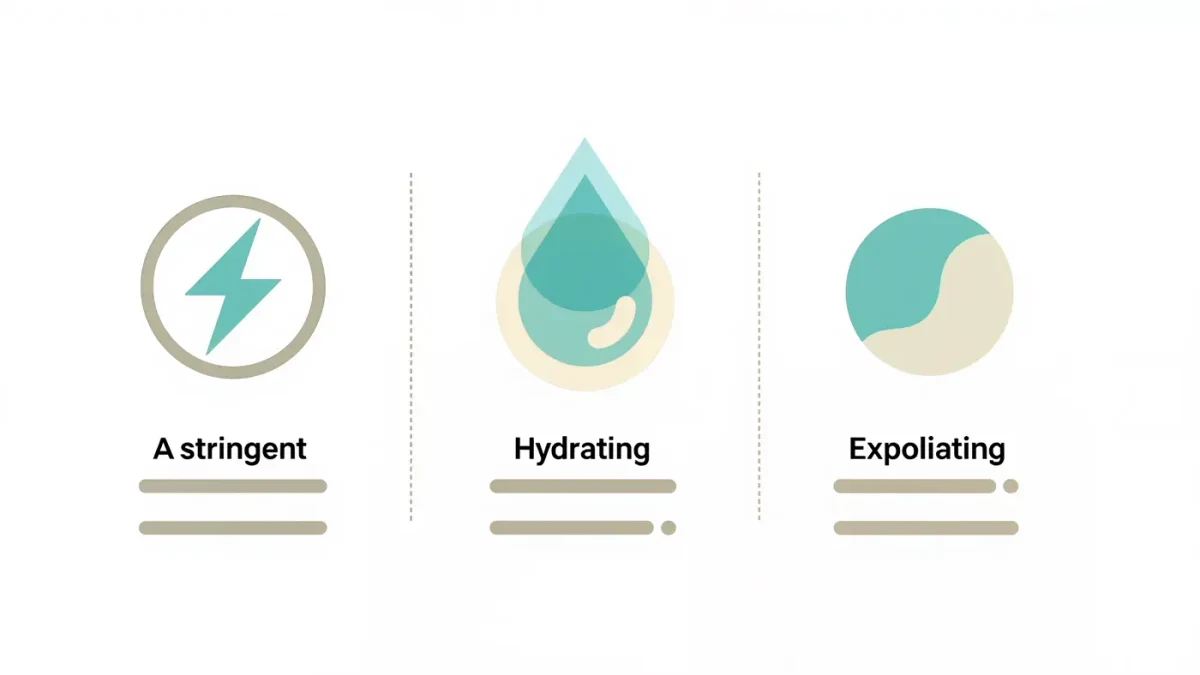
Most people do not need a toner — modern cleansers are pH-balanced, so the astringent toner's original job disappeared somewhere in the 1990s. What survives on shelves is a different product: a water-light hydrating layer, often with humectants like glycerin or panthenol, that adds a first drink of moisture. Useful, sometimes. Mandatory, no. Whether one earns a spot in your routine depends entirely on what you want it to do.
The confusion is generational, and worth unpacking, because the bottle your memory of a toner comes from is not the bottle being sold now. A quick note of housekeeping: this site publishes information, not medical advice, and persistent irritation belongs with a dermatologist, not a comments section.
What was toner originally for?
Old-school toners were astringents — alcohol-heavy liquids built to strip the alkaline film left by harsh bar soaps and to degrease oily skin. The category logic was simple: soap messed up your skin's slightly acidic pH, and a splash of toner put it back. Cult products like Sea Breeze built decades of loyalty on that cold, tight, 'clean' feeling.
Then synthetic detergents arrived. From the late 20th century onward, mainstream cleansers were formulated to be gentle and pH-balanced, which deleted the problem toners were solving. The industry did not retire the category; it reinvented it.
What does toner do now?
Modern toners split into a few honest buckets:
- Hydrating toners. Water, humectants, calming ingredients. Layered under moisturizer, they meaningfully boost how plump skin feels — this is the logic behind the Korean 'seven skin' layering habit, where a watery toner is patted on in several thin layers.
- Exfoliating toners. A low percentage of an acid like glycolic or salicylic, used a few nights a week. These are genuinely active products and should be counted as your exfoliation step, not a subtle extra.
- Treating toners. Essentially lightweight serums with a toner label — niacinamide, azelaic derivatives, antioxidants. Fine products, misnamed boxes.
What no toner does, in any honest reading of the evidence, is 'shrink pores.' Pore size is structural. Any tightening you feel is either hydration doing flattering things or mild irritation doing the opposite.
Related stories: How much product you actually need, from cleanser to SPF · Skin flooding: what it actually means for your routine.
How do you tell if you actually need one?
Ask what is missing from your routine. If your skin drinks moisturizer and still feels tight by noon, a hydrating toner is a cheap fix. If you wear heavy makeup or sunscreen in a warm climate, a toner on a cotton pad can function as a finishing cleanse. If your routine already includes a serum, a moisturizer, and an SPF you actually reapply, a toner is a want, not a need.
Skin that is dry or easily flushed should be choosiest: dermatology sources like MedlinePlus list alcohol-based products among common dry-skin aggravators, and a stinging astringent is the fastest way to make winter worse. Skip anything that leaves your face feeling tight — that sensation is damage reporting, not cleanliness.
Does the order of application matter?
Toner goes right after cleansing, on slightly damp skin, before serums. The thinnest consistency first is the whole rule; a watery layer helps everything after it spread and absorb more evenly. If your 'toner' is really an exfoliating acid, it still goes early, but only on the nights the schedule allows.
Why did toner come back?
The cultural reload came through K-beauty. When Korean routines went global in the mid-2010s, the toner that traveled was not Sea Breeze — it was the watery, glycerin-heavy hydrating layer, rebranded alongside essences and 'skin.' A step once associated with cold astringent sting returned as a soft, obsessively documented ritual. The packaging changed; the shelf space survived.
Quick answers
Can I just use water instead of toner? Not quite — tap water contains minerals that sit on skin as it dries, and it carries no humectants. A hydrating toner is water plus glycerin and friends, applied while skin is still damp. If budget is the issue, a plain glycerin-heavy toner costs little compared to serums.
Should toner burn or sting? No. Stinging signals a formula your skin dislikes, most often from high alcohol content or a concentration of acid your routine did not ask for. Mild coolness is normal; pain is a review, not a rite of passage. Discontinue and reintroduce nothing else for two weeks.
Are toner pads worth it? Pre-soaked pads are convenient and wasteful in equal measure — you pay a premium for water weight and single-use fabric. The exception is exfoliating pads used twice a week, where the dosing is genuinely helpful. For daily hydration, a bottle and hands beat a jar of pads on cost and on trash.