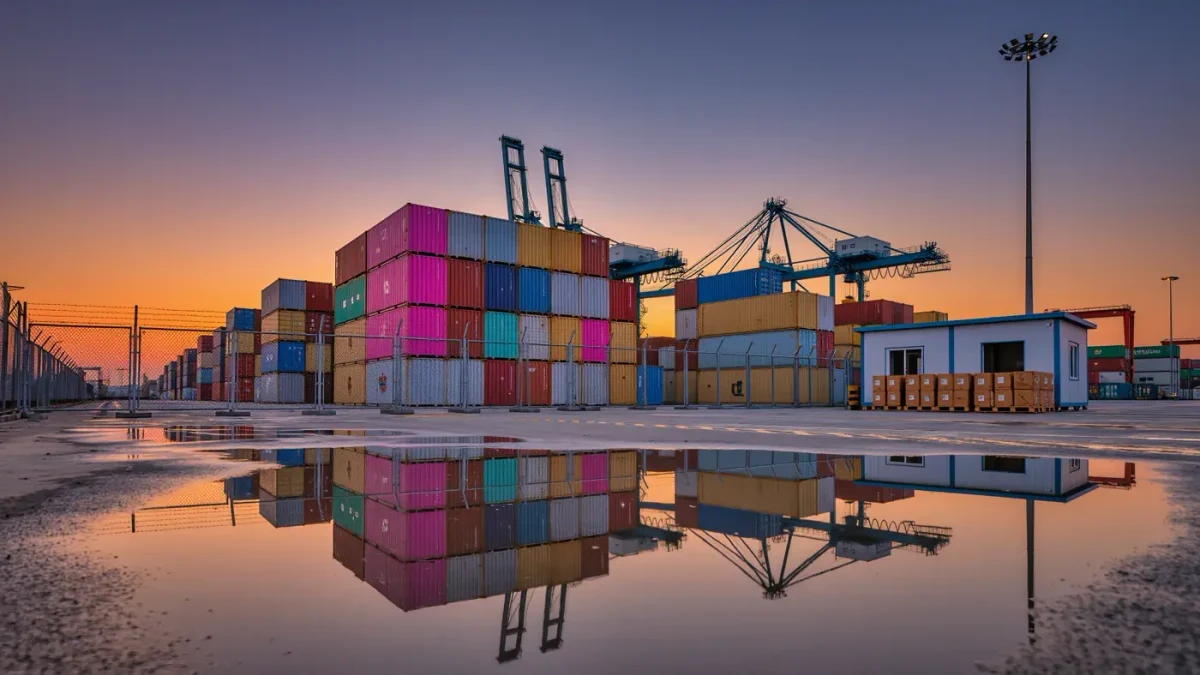
The duty-free loophole that built Shein and Temu is gone, and the receipts are in. Per Reuters on August 29, 2025, the US suspended the de minimis exemption globally — ending duty-free treatment for packages under $800 from every country — after cutting it off for China and Hong Kong shipments back on May 2, 2025. By late December 2025, per Marketplace, low-value parcels entering the US had fallen about 54% compared with before the change.
What was de minimis, in plain terms?
A customs carve-out. Any shipment valued under $800 could enter the US duty-free with minimal paperwork — a threshold meant for traveler souvenirs that accidentally became the structural advantage of ultra-fast e-commerce. Millions of $6 bikinis and $3 phone cases flew under it daily. Kill the carve-out and you kill the margin math: per CNBC's August 29, 2025 coverage, previously exempt shipments from China faced tariffs around 54% or flat per-item fees, whichever was steeper.
How did Shein and Temu respond?
Two moves. First, price: both platforms raised US prices after the May 2025 China-specific cutoff and again ahead of the August global suspension, per reporting at the time. Second, re-architecture: both had already been shifting toward US-based warehousing and local fulfillment, since goods shipped from domestic inventory avoid the cross-border duty entirely. The app stays; the pipeline behind it is being rebuilt around the new rules.
Related stories: Milan and Paris menswear: June 2026's defining moments · LVMH and Kering just told us where luxury is heading.
Who actually pays for the loophole's end?
Everyone, a bit. Per CNBC, an economist study estimated the change could cost US consumers at least $10.9 billion annually — roughly $136 per family — as cheap goods reprice. Small importers and Etsy-scale sellers absorbed chaos at USPS customs processing in the transition. But the 54% parcel collapse suggests much of the ultra-cheap direct-from-factory volume simply stopped coming, rather than paying its way in.
Does this fix fast fashion, or just reroute it?
Honest answer: reroute, for now. Inventory pre-positioned in US warehouses sails through under normal commercial rules, so the haul economy persists — just with slightly higher prices, slower restocks, and thinner assortments of the true $2-loss-leader items that only existed because of de minimis. The structural pressure now comes from somewhere else entirely: the EU's ecodesign regime, which targets the durability and waste side of the same business model.
Is the $800 threshold coming back?
No path back is on the table. The suspension enacted August 29, 2025 applies to all countries and both postal and commercial shipments, per Reuters — a design meant to close the workaround routes, not just the China lane. For shoppers, the practical takeaway landed months ago: the impossibly cheap cart costs a little more, arrives a little slower, and no longer owes its existence to a customs typo from the 1930s.